VRRoom: Immersive Memory Research Platform
2024 · Virtual Reality · Aging Research · Human-Computer Interaction · Research Platforms
VRRoom: Immersive Memory Research Platform
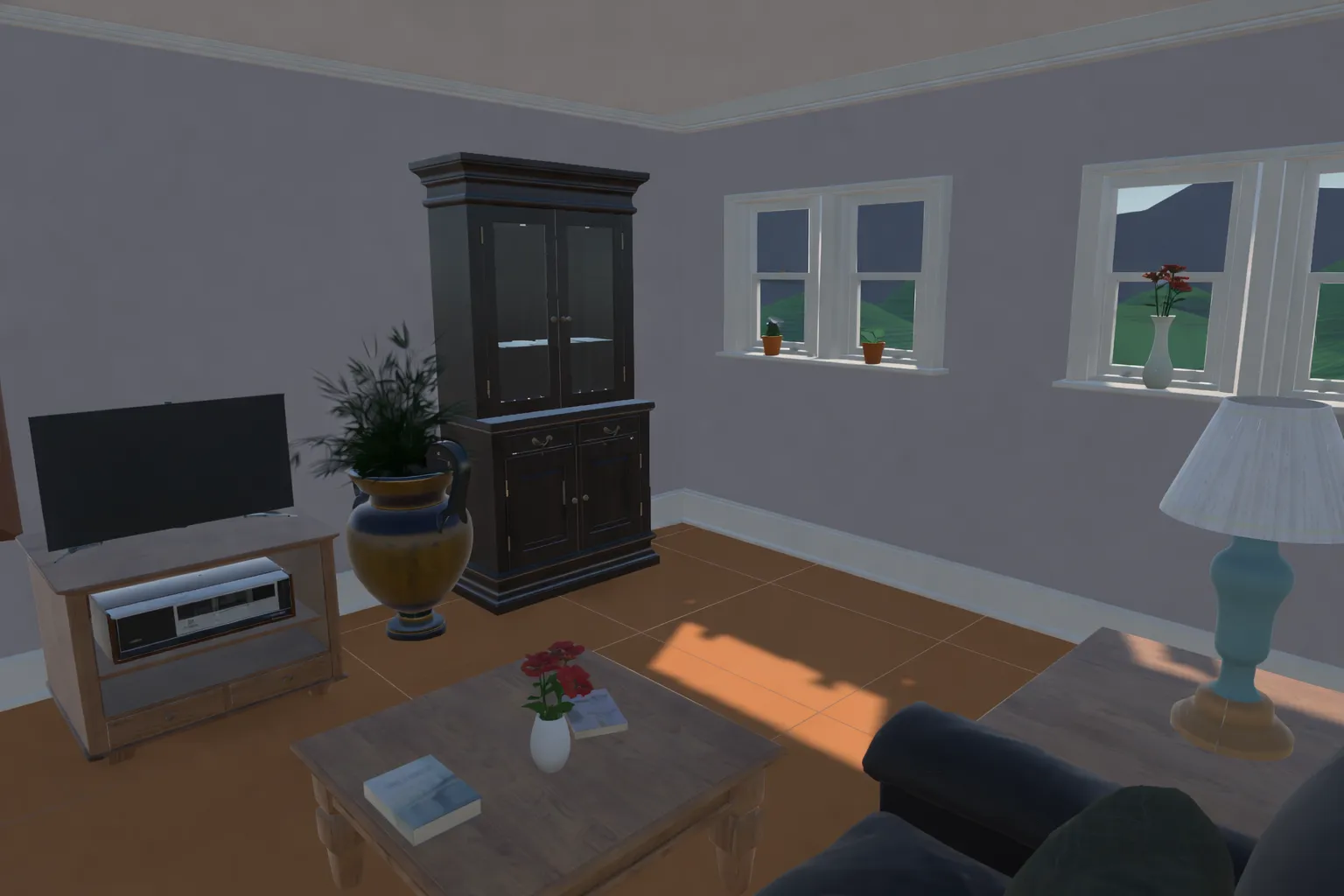
I developed VRRoom in collaboration with Dr. Hsiao-Wen Liao at Georgia Tech to support research on autobiographical memory, aging, and the use of immersive technology to facilitate memory recall in older adults. The platform was built to turn research questions about reminiscence, self-relevant cues, and episodic recall into study-ready virtual environments and interactions.
Overview
One of the core VRRoom experiences recreates a 1970s-style living space designed to cue autobiographical recall. In related 2024 work, the environment included era-specific objects and participant-specific personal photos, allowing the research team to study whether presence, “time travel,” and memory reactivation in VR could support recollection in cognitively healthy older adults and in older adults with mild cognitive impairment.
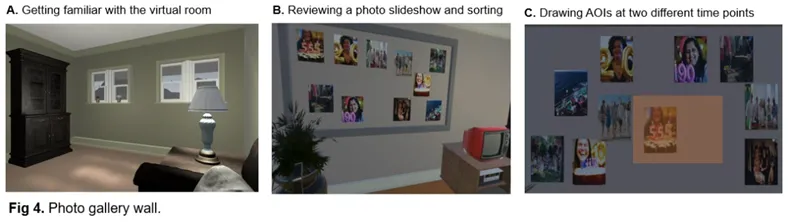
The project grew beyond a single room-based experience. I also built variants that supported more active memory interaction, including photo-based organization tasks in which participants could sort and manipulate memories in space.
My Contributions
My work focused on building and evolving the VR application layer that made these studies possible.
- Implemented the 1970s reminiscence room and its interactive objects
- Built participant-specific media workflows for incorporating personal historical photos
- Developed interaction patterns around older technologies such as a record player and photo carousel
- Added eye-tracking instrumentation so the research team could measure participant attention during recall tasks
- Built additional interfaces for organizing and manipulating memory-related content in VR
Technical Details
From an engineering perspective, the project required translating experimental goals into robust research software.
Key challenges included:
- Building customizable media pipelines for personal photographs and study-specific content
- Designing interactions appropriate for older adult participants
- Supporting multiple input modes, including controllers, hand tracking, ray casting, and direct manipulation
- Integrating telemetry features such as eye tracking so behavioral interaction could be studied alongside recall outcomes
In one VRRoom variant, participants could sort photo-based memories on a virtual push-pin board by dragging and reordering items in space. That extended the platform from a reminiscence environment into a more flexible research tool for studying how older adults engage with personally meaningful visual memories through embodied interaction.
Research Context
VRRoom sits at the intersection of immersive systems and aging research. The goal was not simply to build an appealing VR scene, but to create adaptable research software that could be tuned to the needs of specific studies in Dr. Liao’s lab.
The work reflects the kind of project I find most compelling: building immersive systems grounded in real research questions and designed to serve people directly.