August 28, 2007
Super Metroid
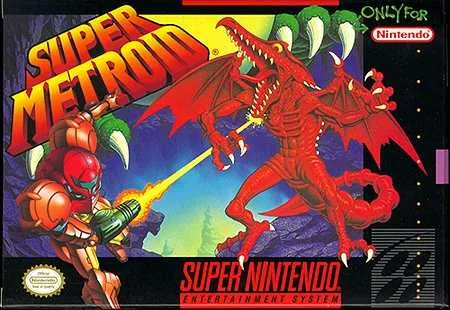
I recently purchased Super Metroid for the Nintendo Wii (originally on the Super Nintendo). As big a gamer as I was back in high school during the release of Super Metroid, I somehow managed to miss playing this one. Years later I would occasionally hear people heap praise onto this game as one of the greatest ever released. I’m glad to finally get the opportunity to play it. My only complaint to Nintendo is that they should have released Super Metroid a few weeks before Metroid Prime III rather than just a few days. As it is, I will likely put Super Metroid playing on hold while I tackle Metroid Prime III (which I’m picking up after work today).
I have played (and beaten) several of the other Metroid games. It’s easy to see just how much influence Super Metroid has on many other games in the series—especially Metroid Prime for GameCube and the GameBoy variations. In some ways, I am disappointed in how much similarity there is. It’s like hearing a cover of an already great song before hearing the original. Somehow you end up missing out on enjoying the experience of listening to the original to the fullest.
The key game play experience that Super Metroid provides is this notion of backtracking. As you explore the game world, you will find that you cannot reach every area, open every door, or kill every enemy. However, you will eventually find an item like jump boots, a particular gun, etc., that will allow you to overcome previously encountered obstacles. So in this context, backtracking is going back and forth through the game world to find the items you need to explore deeper into the world.
Backtracking has been the tenet of Metroid games since the beginning of the series. As far as game critics go, backtracking has been controversial in general but in my opinion Metroid has generally done it right. From the game developers’ perspective, backtracking is useful because they get the most bang for their buck in terms of content development. Since the gamer keeps traversing the same areas in the virtual world, that means artists and level designers can justify spending more time on polishing the content and making it more interactive. If done right, backtracking can also be satisfying to the gamer because they will notice how their skills improve over time in the same areas. Enemies that were once very difficult become easier to defeat as the gamers strategies and weapons/armor improve. Additionally, there is the reward of overcoming obstacles and being able to explore more of the virtual space. Done wrong, the user can find the backtracking tedious and boring and become largely disoriented trying to figure out which way to go next.
So far, Super Metroid has proven to have just the right balance of backtracking versus forward progress to maintain a fun game experience. There are several crafty puzzles in the game. All the weapons and items are Metroid staples, but they are still fun to acquire and use. Some items were actually introduced in Super Metroid, but as they were reused in later games they are not new to me. Bosses are huge and visually impressive given the capabilities of the Super Nintendo. However, I do find the strategies to beat them a bit contrived and monotonous (though it’s rare for me to make differing observations of bosses in other games).
As it is, I’m probably only a third of the way through the game. So far I can say that Super Metroid is definitely deserving of its praise, especially when you consider it was originally released in 1994. If you’re like me and have played most of the other more recent Metroid games already then you might not be quite so impressed, but it’s definitely worth the $8 to download and play on the Wii.